
Most visitors decide whether to keep reading within the first few seconds of landing on a homepage, well before they've read a full paragraph. That reality puts enormous weight on the headline and whatever else sits above the fold, since a visitor who doesn't understand what a business does, and why it matters to them, within those first seconds usually leaves without ever seeing the rest of the page.
That pressure explains why homepage copywriting attracts more advice, more debate, and more disagreement than almost any other content format a business produces. Everyone with a stake in the business — founders, sales, product, marketing — has an opinion about what the homepage should say, and that pressure to satisfy every internal stakeholder is often the very thing that produces the vague, unfocused homepages this piece is written to help avoid.
That five-second window is what separates homepage copywriting from most other content a business produces. A blog post can build its case gradually across several paragraphs. A homepage headline has almost no room for a gradual build — it has to communicate value fast enough to earn the scroll that gets a visitor to everything else on the page.
The harder problem underneath that time pressure is audience breadth. A homepage visitor might already know your brand and be checking pricing. Another might be comparing you against three competitors open in other tabs. Another might have landed by accident, with no context at all. A landing page built for a specific ad campaign can speak to one of these visitors precisely. A homepage has to say something true and compelling to all of them within the same handful of sentences.
Need homepage copy that actually converts?
Tell us about your audience, and we'll scope the project.
Get a Free QuoteThe instinct to solve this breadth problem by trying to speak to everyone equally in the same sentence usually backfires. Copy written to satisfy every possible visitor at once tends to say very little to any of them, hedging into vague language — "solutions," "innovative," "trusted partner" — that technically applies to nobody's specific situation. The stronger approach identifies the single most valuable or most common visitor type and speaks to them clearly first, then gives other segments a clear path to the content built specifically for them.
That's why homepage navigation and structure matter as much as the words themselves. A homepage doesn't need to answer every visitor's question directly in the hero section — it needs to make the primary message unmistakably clear, then provide obvious next steps for visitors whose needs differ from that primary audience. Service pages, industry-specific landing pages, and case studies exist precisely to handle the depth a homepage can't fit into a few opening sentences.
Human-written website copy consistently outperforms generic, AI-generated text for exactly this reason on a homepage specifically — the judgment about which single message matters most, and what to deliberately leave out for other pages to handle, is precisely the kind of decision a person makes by understanding a business deeply, not something a generated draft can reliably determine on its own.
That judgment is also why a homepage rewrite rarely benefits from a purely internal, committee-driven process. Every stakeholder tends to want their own priority mentioned prominently, which is exactly the pressure that produces the crowded, unfocused homepages this piece is describing. An outside writer, working from real audience research rather than internal politics, tends to make sharper prioritization calls than a page assembled from a long list of requested additions.
What a Complete Homepage Copywriting Process Includes
A thorough process starts with identifying your primary visitor type and the single most important thing they need to understand within seconds of arriving. From there, a writer drafts a hero section built around that message, structures secondary sections to guide other visitor types toward relevant pages, and reviews the whole page for a single, clear next step.
| Stage | Generic homepage copy | Complete homepage copywriting process |
|---|---|---|
| Audience approach | Tries to address everyone equally | Speaks clearly to a primary segment first |
| Above-the-fold clarity | Vague value language | Specific, immediately understandable value |
| Structure | Cramming every message into one section | Primary message up top, depth handled elsewhere |
| Call to action | Multiple competing asks | One clear, obvious next step |
Human-Written vs Generic Homepage Copy
Generic homepage copy has a familiar shape: technically correct, structurally complete, and interchangeable with a hundred other homepages in the same category. It fills the required sections without ever landing on the one specific detail that makes a visitor feel like this business actually understands their situation.
| Factor | Generic homepage copy | Human-written homepage copy |
|---|---|---|
| Value proposition | Vague, could apply to any competitor | Specific to what this business actually does |
| Audience judgment | Tries to speak to everyone equally | Prioritizes the most important visitor type |
| Trust signals | Generic claims of quality or experience | Specific, verifiable credibility markers |
| Conversion clarity | Multiple competing calls to action | One clear, prioritized next step |
Key Takeaways
- A homepage has roughly five seconds to earn attention, which puts enormous weight on the headline and above-the-fold content specifically.
- Homepage copy has to serve multiple audience types at once — the strongest approach prioritizes one primary visitor rather than diluting the message for everyone.
- Navigation and page structure carry work the homepage copy itself doesn't need to do, routing different segments toward more specific content.
- Vague, category-generic language is the clearest sign of weak homepage copy, whatever produced it.
- A single clear call to action consistently outperforms multiple competing asks on the same page.
How to Choose a Homepage Copywriting Service
Ask a candidate how they'd approach identifying your primary audience before writing anything. A strong answer describes real research into who actually converts on your site today, not an assumption based on who you'd ideally like to attract.
Ask, too, how they handle the tension between speaking clearly to one audience and not alienating others. A skilled homepage copywriter has a specific answer involving page structure and navigation, not just a promise to "make it work for everyone" in the copy alone, which is usually the instinct that produces the vague, watered-down homepages this piece has been describing.
It's worth asking a candidate to walk through a past homepage project in detail — what the primary audience was, what they chose to prioritize, and what they deliberately left out. A specific, considered answer signals real strategic thinking behind the work. A vague answer about "making it engaging" suggests the writing happened without the audience-prioritization step that actually determines whether a homepage converts.
Where Homepage Copy Fits Into a Wider Website Strategy
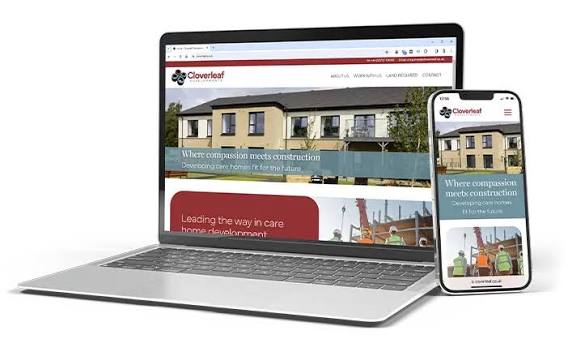
A homepage rarely succeeds in isolation from the rest of a site's copy. Strong website copywriting across every page, not just the homepage, gives the homepage somewhere useful to send visitors whose needs the front page can't fully address — a service page, a pricing page, a case study — which is exactly why homepage copy and the rest of a site's copy should be planned together rather than treated as separate, disconnected projects.
Common Mistakes Businesses Make With Homepage Copy
The most common mistake is writing a homepage headline that describes the company rather than the value to the visitor — leading with what the business is instead of what changes for the reader. A second is cramming every product, service, and audience segment into the hero section, producing a page that says a great deal without actually communicating anything clearly.
A third mistake is writing homepage copy in isolation from actual visitor behavior data. Analytics tools reveal which pages visitors go to next, where they drop off, and which headlines correlate with longer time on site, and a homepage rewrite that ignores this existing evidence is essentially guessing at problems the data could answer directly. Reviewing this behavior before drafting new copy, rather than after launching it, tends to produce a far more targeted rewrite.
A fourth mistake is over-indexing on what competitors' homepages say, matching their structure and tone rather than starting from your own audience's actual needs. Competitive research is useful for understanding the category's baseline expectations, but a homepage that reads as a slight variation on every competitor's page misses the exact differentiation opportunity a homepage rewrite is meant to capture.
What to Expect From the Engagement
A well-run project starts with research into your current visitors, audience segments, and past homepage performance, followed by a strategy conversation about which message deserves priority. Expect a structured draft you can react to, a defined revision process, and clear reasoning behind every major copy decision.
Realistic timelines run one to two weeks for a homepage rewrite, factoring in the research and strategy work that has to happen before any copy gets drafted. A provider promising finished homepage copy within a day, with no audience research involved, is very likely working from a generic template rather than anything built around your specific visitors.
It's reasonable to test a new homepage draft against a segment of live traffic before fully committing to it, particularly for a business with enough volume to run a meaningful A/B test. Real visitor behavior settles arguments that internal opinion alone often can't, and a data-backed homepage decision tends to be far more durable than one based purely on which version the team happened to prefer in a meeting.
Ultimately, homepage copy succeeds when a visitor understands within seconds why this business deserves their attention, and knows exactly what to do next. That standard is worth holding any homepage copywriting service to, because a homepage that fails it is losing visitors before the rest of the site ever gets a chance to make its case.
It's worth revisiting homepage copy on a regular cadence rather than treating a rewrite as a one-time project completed and then forgotten. A homepage that converted well when a business had a narrower product line or a different primary audience often needs meaningful revision as the business evolves, even when nobody has flagged an obvious problem with the current version. Businesses that build a periodic homepage review into their broader marketing calendar tend to catch this drift before it costs meaningful traffic and conversions.
That periodic review is also a good moment to check whether the homepage's primary audience assumption still holds. A business that started serving mostly small companies and has since moved upmarket toward larger enterprise clients, for instance, may still have homepage copy written for the earlier audience, quietly undermining the credibility needed to win the larger deals the business is now actually pursuing.
Frequently Asked Questions
What makes homepage copy different from other website copy?
A homepage has to work for every kind of visitor at once — someone who already knows your brand, someone comparing you to competitors, someone who landed there by accident — rather than a single defined audience the way a targeted landing page can. That breadth is the core challenge homepage copy has to solve.
How much time does a homepage actually have to make an impression?
Most visitors decide whether to stay or leave within the first few seconds of landing on a page, which means the headline and the content visible without scrolling carry a disproportionate share of the persuasive weight.
Should a homepage try to speak to every audience segment equally?
No. A strong homepage identifies its most valuable or most common visitor type and speaks to them clearly first, then provides clear navigation paths for other segments rather than diluting the main message trying to address everyone at once in the same sentence.
How much does a homepage copywriting service typically cost?
Pricing usually reflects research and strategy time more than word count, since a homepage is short but demands significant upfront understanding of the audience and offer. Rates vary by provider experience and whether the project includes messaging strategy alongside the writing itself.
Can AI write effective homepage copy?
AI can produce a structurally reasonable draft, but strong homepage copy depends on specific audience research and judgment about what to leave out, which generated text typically can't provide. A human-written homepage tends to convert better because it reflects real understanding of the visitor's actual hesitation.
Ready for a homepage that actually converts?
Tell us about your audience, and we'll match you with a writer today.
Get a Free Quote